

Get to Know: Louis L. Reed
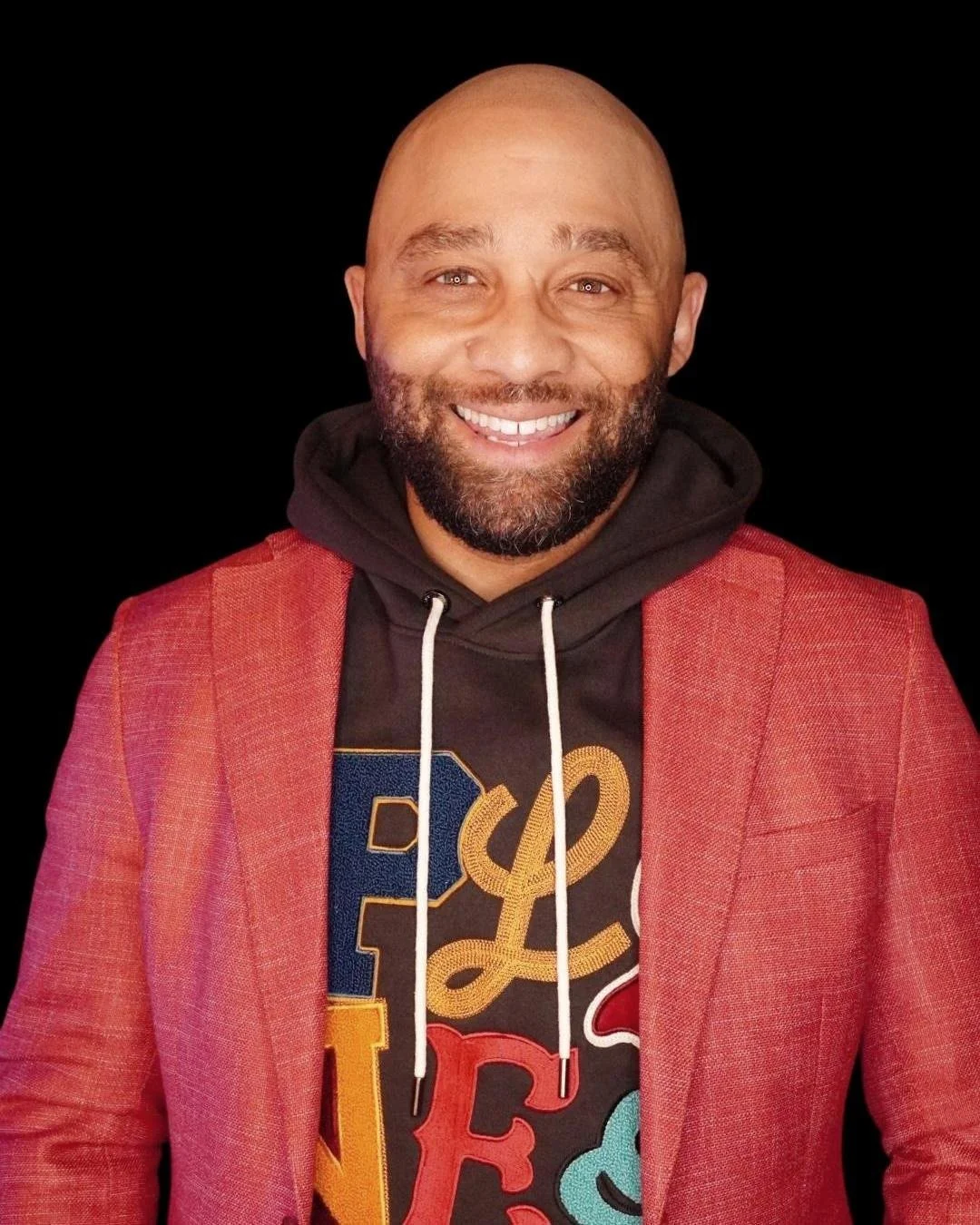
Louis L. Reed
Once a month, we’re spotlighting a CG-USA staff member. It’s a chance to get to know them and why they believe this work matters. First up, our National Sr. Advisor, Louis L. Reed.
Let’s start with two truths and a lie.
I helped build bipartisan coalitions that contributed to the passage of major criminal justice reforms across the country.
I once turned down a meeting at the White House because I was too busy.
I spent nearly 14 years in federal prison before becoming a national policy advisor and organizer.
Ok, now—what got you into peacebuilding?
Honestly, survival. I came from environments where conflict was constant, where people learned to operate from fear, scarcity, ego, and trauma. Prison sharpened that reality. I saw firsthand what happens when people stop believing they have a stake in each other’s humanity.
What pushed me into peacebuilding was realizing that policy alone doesn’t hold a country together. Relationships do. Trust does. The ability to disagree without dehumanizing each other does. I’ve worked in criminal justice reform for years, but underneath all of it is the same question: how do you create conditions where people don’t see each other as enemies?
That’s the work.
Who’s your favorite peacebuilder, and why?
Nelson Mandela.
Not because he ignored harm or pretended conflict didn’t exist, but because he understood that a country cannot survive if vengeance becomes its organizing principle.
What stands out to me is that he emerged from 27 years in prison without allowing bitterness to become his political philosophy. That takes discipline, vision, and restraint. He understood that reconciliation is not weakness. It's a strategy. It’s nation-building.
I also respect that he knew peacebuilding wasn’t about avoiding hard truths. It was about creating enough shared futures for people to stop seeing destruction as the only option.
Why are you excited about being on the Common Ground USA team?
Because the country is emotionally exhausted, politically fragmented, and increasingly suspicious of anyone outside their tribe. Most people can feel that something is breaking down socially, but very few organizations are willing to step into that space in a serious way.
What excites me about Common Ground USA is that it’s trying to rebuild trust and civic muscle before crisis hits. Not performative unity. Not forced agreement. Real relationship-building across difference.
I also appreciate that the work requires humility. Nobody has this figured out. We’re trying to create spaces where people can think more clearly, react less impulsively, and remember that democracy requires practice, not just opinions.
If you could do one thing to create a safer, more united country, what would it be?
I would radically increase opportunities for meaningful human contact across lines of difference.
A lot of polarization survives because people never actually encounter each other outside of algorithms, stereotypes, or political narratives. It’s easier to hate abstractions than neighbors.
What this really means is we need more shared civic experiences: community problem-solving, local dialogue, service projects, storytelling spaces, neighborhood-level engagement. Places where people can rediscover mutual responsibility instead of constantly performing outrage.
You cannot sustainably legislate unity into existence. People have to experience it.
What’s your go-to conflict de-escalation move in your day-to-day life?
Lower the emotional temperature without lowering the honesty.
Most conflicts escalate because people feel unheard, disrespected, or trapped. So I try to slow conversations down enough for people to feel understood before jumping to solutions or rebuttals.
I also have a personal rule I call BEAR. I try not to argue with people who are Belligerent, Emotional, Angry, or Resentful. Not because those emotions aren’t real, but because once someone is operating from that place, the conversation usually stops being about understanding and starts being about winning, unloading, or retaliating.
I pay attention to posture, too. If someone feels like you’re trying to defeat them, they stop listening. If they feel like you’re trying to understand the underlying concern, the conversation usually shifts.
And sometimes the best de-escalation move is asking a better question instead of making a stronger argument.
And finally… which one was the lie?
I never turned down a White House meeting because I was too busy.
